
Volkswagen's German Factory Crisis: Four Plants Face the End of Car Production by 2034


Volkswagen is facing one of the biggest restructuring challenges in its history as the German automaker prepares to reshape its domestic manufacturing network, cut costs and reduce excess production capacity.
The company has agreed to a sweeping transformation plan that includes significant workforce reductions and the gradual end of vehicle production at four German sites.
The developments highlight the growing pressure on Germany's traditional automotive industry as Volkswagen attempts to respond to weaker demand, intense competition from Chinese automakers, high production costs and changing global trade conditions.
Four German Plants in the Spotlight
According to reports surrounding Volkswagen's restructuring plans, production is scheduled to end gradually at four German locations.
| Plant | Location | Planned End of Vehicle Production |
|---|---|---|
| Emden | Lower Saxony | 2031 |
| Zwickau | Saxony | 2031 |
| Hanover | Lower Saxony | 2032 |
| Neckarsulm | Baden-Württemberg | 2034 |
The End of an Era for Volkswagen's German Production Network?
The proposed timetable represents a major change for Volkswagen's industrial footprint in Germany.
However, ending vehicle production does not necessarily mean that every factory site will simply disappear. Volkswagen and its stakeholders are also examining alternative uses, new business activities and ways to reduce the economic impact on affected regions.
That distinction is particularly important because several of the locations have long industrial histories and employ thousands of people directly and indirectly.

Emden: A Major Electric Vehicle Plant Facing a New Future
The Emden plant is one of Volkswagen's most important German locations for electric vehicle production.
Volkswagen says the factory was converted for electric vehicle production while operations continued, beginning in 2020. Today, the site produces the fully electric ID.4, ID.7 and ID.7 Tourer.
The plant covers approximately 4.3 million square meters and employs more than 7,700 people, according to Volkswagen's 2026 plant information.
The site has produced more than 12.5 million vehicles since production began in 1964, making the proposed end of vehicle production in 2031 particularly significant.
Zwickau and the Electric Vehicle Challenge

Zwickau became an important symbol of Volkswagen's transition toward electric mobility. The plant was transformed into an electric vehicle production hub and has been associated with models from Volkswagen and Audi.
Yet the rapid expansion of electric vehicle manufacturing has not eliminated the industry's wider problem of excess capacity.
Volkswagen's restructuring strategy is therefore aimed not only at technology but also at matching production capacity with actual market demand.
Hanover: Another Major German Site Under Pressure
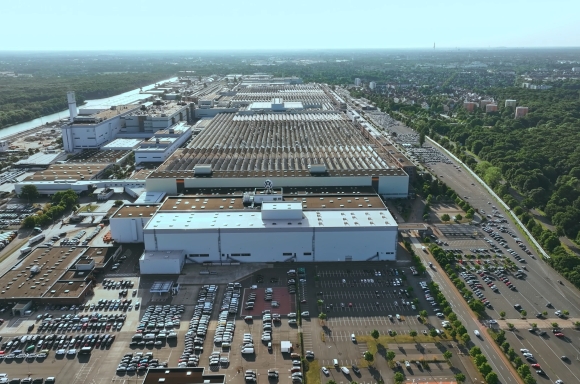
The Hanover site is another major part of Volkswagen's German industrial network.
The factory has a long history of producing commercial vehicles and is closely associated with Volkswagen's van and mobility business.
Under the reported restructuring timetable, vehicle production at the site could continue until 2032 before being phased out.
Neckarsulm: Production Could Continue Until 2034
The Neckarsulm plant in southern Germany is also included in the long-term restructuring plans.
The reported timetable places the end of vehicle production there in 2034, making it the final one of the four sites currently identified in the plan.
The longer timetable gives Volkswagen additional time to manage future product programs, workforce changes and possible alternative uses for the site.
Why Is Volkswagen Cutting Production Capacity?
Volkswagen's restructuring comes as the European automotive market undergoes a major transformation.
The company is dealing with several pressures at the same time, including:
- Intense competition from Chinese automakers in Europe and China.
- Weakening sales performance in China, one of Volkswagen's most important markets.
- High manufacturing costs at some German production sites.
- Excess production capacity across the European automotive industry.
- Trade pressure and tariffs affecting global vehicle economics.
- The expensive transition toward electric vehicles and software-defined cars.
Volkswagen Plans Major Job Cuts
The factory restructuring is closely connected to a much larger workforce reduction program.
Volkswagen has agreed to additional reductions of approximately 50,000 jobs, bringing the potential total workforce reduction under the broader restructuring program to around 100,000 positions by 2030.
A significant share of the reductions is expected to affect Germany, although the final distribution will depend on negotiations and the implementation of the restructuring program.
Why Are Volkswagen Workers Worried?
Volkswagen's workforce representatives have raised serious concerns about the consequences of plant restructuring and job reductions.
Labor representatives argue that the German sites represent more than production facilities. They are major employers that support entire regional economies through suppliers, logistics companies and local services.
The prospect of reducing production therefore creates uncertainty far beyond Volkswagen's own workforce.
Germany's Automotive Industry Faces a Wider Challenge
Volkswagen's problems are not isolated.
Germany's automotive industry is confronting a difficult combination of high domestic costs, technological disruption, weaker economic growth and increasingly aggressive competition from manufacturers based in China.
The transition from combustion engines to electric vehicles also requires manufacturers to redesign factories, invest in batteries and software, and rethink their traditional supply chains.
For Volkswagen, the challenge is to become more competitive without destroying the industrial ecosystem that made Germany one of the world's leading automotive manufacturing centers.
What Happens Next?
Could the Plans Still Change?
Yes.
Volkswagen's German operations involve complex negotiations between management, employee representatives, shareholders and regional authorities.
The restructuring agreement establishes a strategic direction, but the exact future of individual sites, employment levels and alternative activities can continue to evolve as the company implements the plan.
VibCar Analysis: A Turning Point for Volkswagen
Volkswagen's restructuring marks a critical turning point for one of Germany's most recognizable industrial companies.
The company is attempting to reduce excess capacity, lower fixed costs and concentrate investment on products and technologies that can compete in a rapidly changing global market.
The difficult part will be balancing financial efficiency with the industrial and social importance of Volkswagen's German manufacturing network.
For employees and communities surrounding the affected plants, the coming years could be decisive. For Volkswagen, the restructuring could determine whether the company can regain competitiveness while maintaining a strong presence in Germany.
Volkswagen is undergoing one of the most significant restructurings in its history. Vehicle production is planned to end gradually at Emden, Zwickau, Hanover and Neckarsulm between 2031 and 2034, while the company moves ahead with major workforce and cost reductions.
The story is bigger than four factories. It reflects the broader transformation of the German automotive industry as traditional manufacturers confront Chinese competition, high production costs, electric vehicle disruption and changing global demand.
Key Volkswagen Restructuring Facts
| Category | Details |
|---|---|
| Company | Volkswagen Group |
| Country | Germany |
| Plants affected by planned end of vehicle production | Emden, Zwickau, Hanover, Neckarsulm |
| First planned production endings | Emden and Zwickau – 2031 |
| Hanover | 2032 |
| Neckarsulm | 2034 |
| Additional planned job reductions | Approximately 50,000 |
| Broader potential workforce reduction | Approximately 100,000 by 2030 |
| Main objective | Reduce costs, excess capacity and improve competitiveness |
Final Verdict
Volkswagen is not simply closing factories because of one bad year. The company is attempting to redesign its entire industrial structure for a new era of automotive competition.
The planned end of vehicle production at four German sites is one of the clearest signs yet that the traditional European automotive model is under enormous pressure.
Whether Volkswagen's strategy succeeds will depend on its ability to reduce costs while developing competitive electric vehicles, software and new products without losing the manufacturing expertise and workforce that have defined the company for decades.
Volkswagen Newsroom – Official company information and plant data
Reuters – Volkswagen restructuring and German plant plans
Associated Press – Volkswagen workforce and restructuring developments
VibCar editorial analysis
This article has been independently rewritten and edited by VibCar based on publicly reported information. The restructuring timetable and workforce figures may change as Volkswagen implements its plans.
© 2026 VibCar – All Rights Reserved
%20(1).png)


.png)

0 Comments