
Geely EM-i: How Does It Achieve More Than 1,000 km of Range in the Real World?
Geely's EM-i plug-in hybrid technology is attracting attention with claims of more than 1,000 km of total range. But what actually makes this possible? Is the 1,000-km figure realistic for everyday drivers, and how much of that distance can be covered using electricity alone?
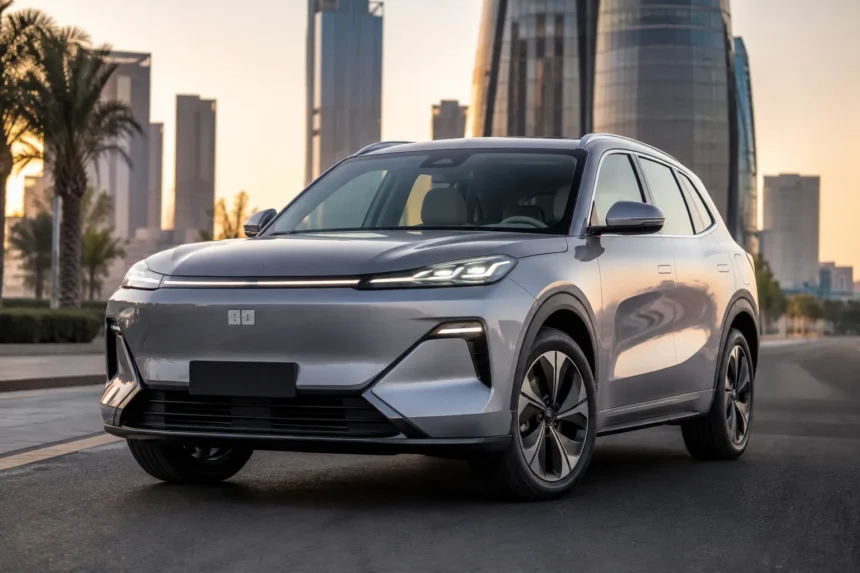
Geely EX5 EM-i plug-in hybrid technology.
The answer lies in the way Geely combines a gasoline engine, electric motor, high-voltage battery and intelligent energy-management software. Instead of relying entirely on either gasoline or electricity, the EM-i system continuously manages both energy sources according to driving conditions.
For drivers in markets such as the Middle East, this approach could be particularly attractive. Daily commuting can be handled largely with electric power, while the gasoline engine provides additional flexibility during long-distance journeys.
What Is Geely EM-i Technology?
EM-i stands for E-Motive Intelligence. It is Geely's plug-in hybrid technology designed to combine the efficiency of electric propulsion with the long-distance flexibility of an internal-combustion engine.
Unlike a conventional hybrid, a plug-in hybrid can be charged from an external electricity source. This allows drivers to use a larger battery for daily electric driving while retaining a gasoline engine for longer trips.
Models using the technology include the Geely EX5 EM-i and Starray EM-i, although specifications and naming can vary between markets.
How Does the EM-i Powertrain Work?
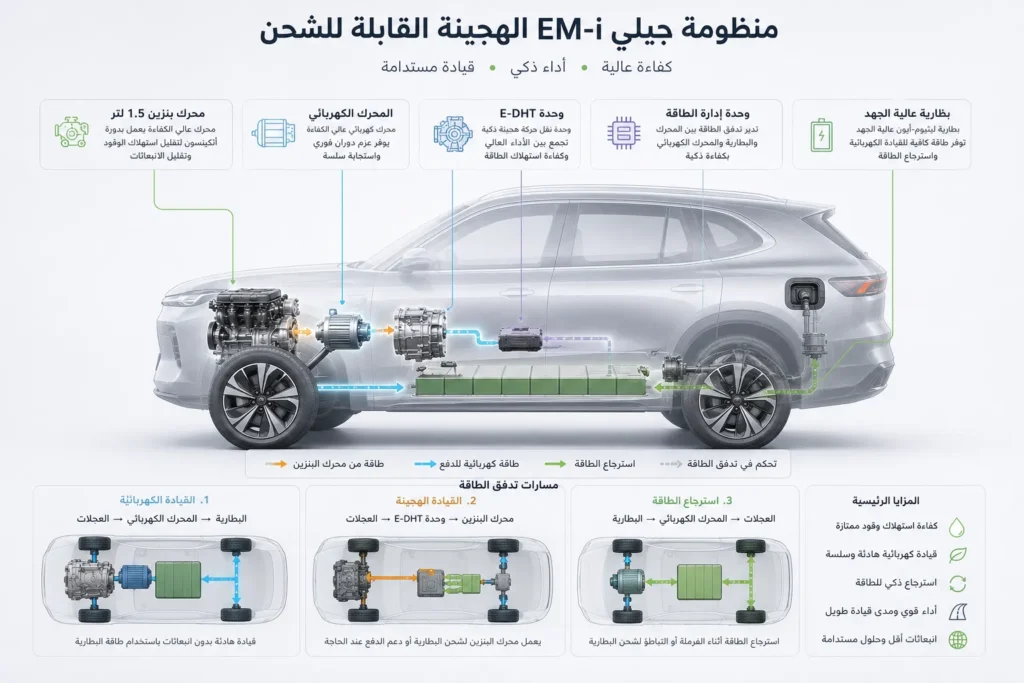
Illustration of the main components and energy flow within the Geely EM-i hybrid system.
The core EM-i architecture combines several major components that work together as a single energy system.
| Component | Function |
|---|---|
| 1.5-liter gasoline engine | Generates power and contributes to propulsion depending on operating conditions. |
| Electric motor | Provides electric propulsion and rapid torque delivery. |
| High-voltage battery | Stores electrical energy for electric driving and hybrid operation. |
| E-DHT system | Manages energy transfer and the interaction between the gasoline and electric systems. |
Some global specifications of the EX5 EM-i feature an electric motor rated at up to 160 kW, an 18.4 kWh battery and a dedicated hybrid transmission. Other markets offer different battery configurations and range figures.
That is why buyers should always check the specifications of the vehicle sold in their own country instead of assuming that every EX5 EM-i has identical hardware.
The Secret Behind the 1,000+ km Range
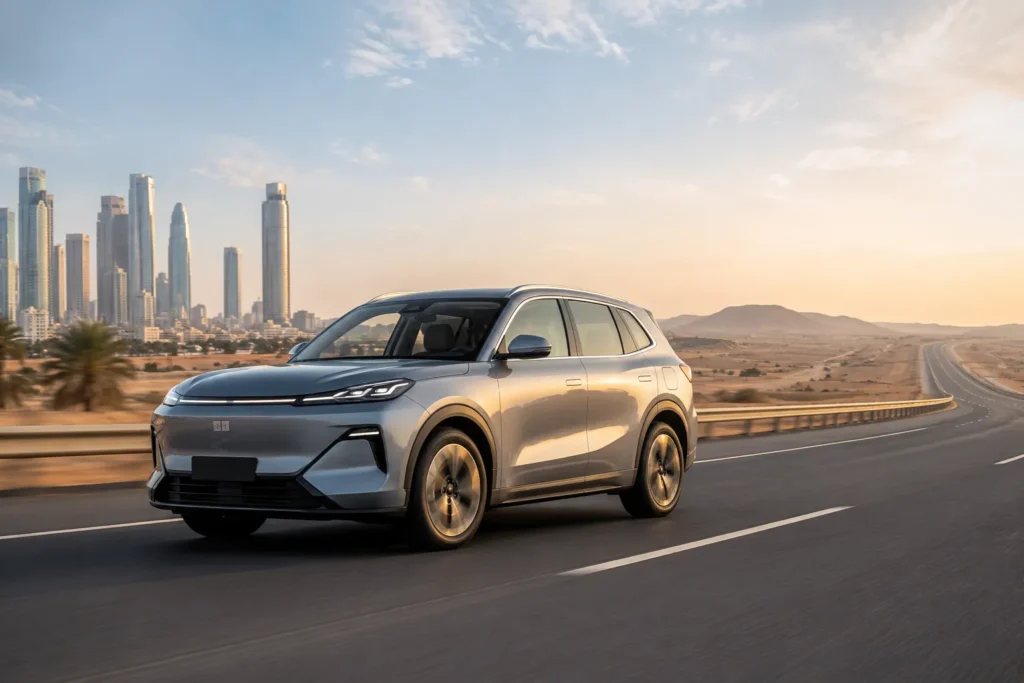
The most important factor is the combination of electrical energy and gasoline. The vehicle does not attempt to travel more than 1,000 km using its battery alone.
Instead, the total range comes from several sources:
- Energy stored in the high-voltage battery.
- Fuel stored in the gasoline tank.
- Regenerative braking.
- Efficient operation of the gasoline engine.
- Intelligent energy management.
- Efficient electric propulsion.
Geely states that its EM-i engine can achieve a thermal efficiency of up to 46.5% in current specifications associated with the technology.
Thermal efficiency should not be interpreted as meaning that 46.5% of the fuel's energy reaches the wheels. Rather, it describes how effectively the engine converts chemical energy in the fuel into useful mechanical energy under specified operating conditions.
A Powerful Electric Motor
The electric motor is another important part of the system. In global EX5 EM-i specifications, the electric motor can produce up to 160 kW and as much as 320 Nm of torque, depending on market specifications.
Electric motors are particularly effective during urban driving because they can deliver torque almost immediately.
- Quick acceleration from a stop.
- Efficient low-speed driving.
- Energy recovery during deceleration.
- Reduced dependence on the gasoline engine during short trips.
This is one reason plug-in hybrids can be particularly efficient in cities when their batteries are regularly charged.
What Is the 11-in-1 Electric Drive System?
One of Geely's major technical features is its 11-in-1 electric drive system.
The term does not mean that the vehicle has 11 motors. Instead, Geely integrates multiple electrical and electronic components into a highly integrated drive unit.
The objective is to reduce the size, weight and complexity of the system while minimizing energy losses.
Geely's specifications for certain markets quote electric-drive and transmission efficiencies approaching 98%, illustrating the importance of minimizing losses throughout the energy path.
What Happens When the Battery Gets Low?
This is one of the biggest advantages of a plug-in hybrid.
When the battery has sufficient charge, the vehicle can rely heavily on electric propulsion, particularly during urban driving.
As the battery's state of charge falls, the gasoline engine can take a larger role in supplying energy. The vehicle does not suddenly become a conventional gasoline car. Instead, the hybrid system continues to manage the gasoline engine, electric motor and battery as one integrated powertrain.
Regenerative braking can also recover energy during deceleration and braking, helping the system maintain an appropriate battery charge level.
What Is the Role of E-DHT?
DHT stands for Dedicated Hybrid Transmission. In the EM-i system, the E-DHT forms a critical part of the energy-management architecture.
Instead of forcing the gasoline engine to operate in the same way under every condition, the hybrid system can change its strategy according to vehicle speed, load, battery state and driving requirements.
At lower speeds, electric propulsion can be highly effective. Under other conditions, the gasoline engine can operate in a more efficient range while the electric system assists as required.
Three Main Driving Modes
Pure Mode
Pure mode prioritizes electric propulsion. It is particularly suitable for short daily trips when the battery has sufficient charge.
- Quiet operation.
- Instant electric torque.
- Reduced gasoline use.
- Useful for urban commuting.
Hybrid Mode
Hybrid mode allows the vehicle to automatically manage the interaction between gasoline and electric power.
For many drivers, this will be the most convenient setting because the vehicle can determine how to distribute energy according to driving conditions.
Power Mode
Power mode focuses more heavily on performance and responsiveness. It can be useful when stronger acceleration is required for overtaking, climbing or demanding driving conditions.
However, aggressive driving naturally increases energy consumption. No hybrid system can maintain maximum efficiency when the driver consistently demands maximum performance.
Why Does the 1,000-km Figure Not Apply to Every Driver?

Official test figures and real-world range can differ significantly depending on driving conditions.
Official range figures are produced under standardized testing conditions. Real-world driving is much less predictable.
Actual range can be affected by:
- Driving speed.
- Outside temperature.
- Air-conditioning use.
- Vehicle load.
- Tire pressure.
- Road conditions.
- Wind.
- Traffic.
- Battery state of charge.
- Driving style.
- Use of performance modes.
For example, a vehicle that achieves excellent efficiency in urban conditions with a fully charged battery may consume more fuel during a long highway trip at high speed after its available electric energy has been largely used.
How Does Gulf Heat Affect the EM-i?
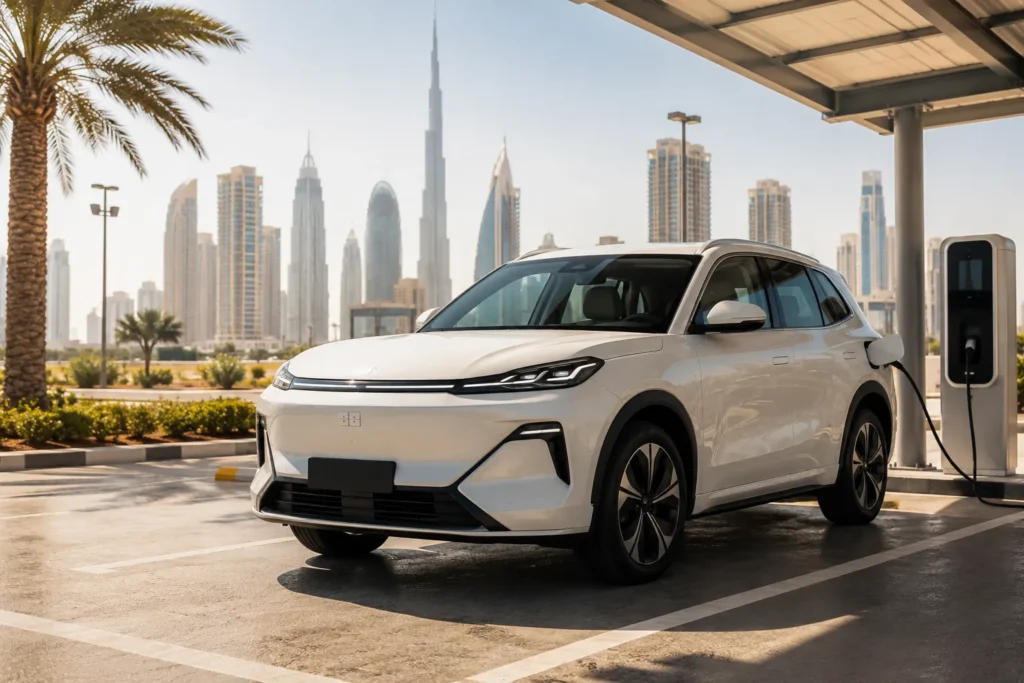
The hot climate of the Gulf region can influence energy consumption, battery temperature and air-conditioning demand.
For buyers in Saudi Arabia, the United Arab Emirates, Kuwait and other hot-weather markets, temperature management is an important part of evaluating any electrified vehicle.
High temperatures increase the demand for cabin cooling and can also increase the energy required by thermal-management systems.
A plug-in hybrid has an additional advantage because it retains a gasoline engine, but that does not mean heat has no effect on efficiency.
Practical Tips for Hot Climates
- Park in shade whenever possible.
- Use pre-conditioning while the vehicle is connected to a charger if supported.
- Maintain correct tire pressures.
- Keep the cooling system properly serviced.
- Avoid unnecessary high-speed driving.
- Do not treat the official range as a guaranteed real-world figure.
Battery Technology and Thermal Management
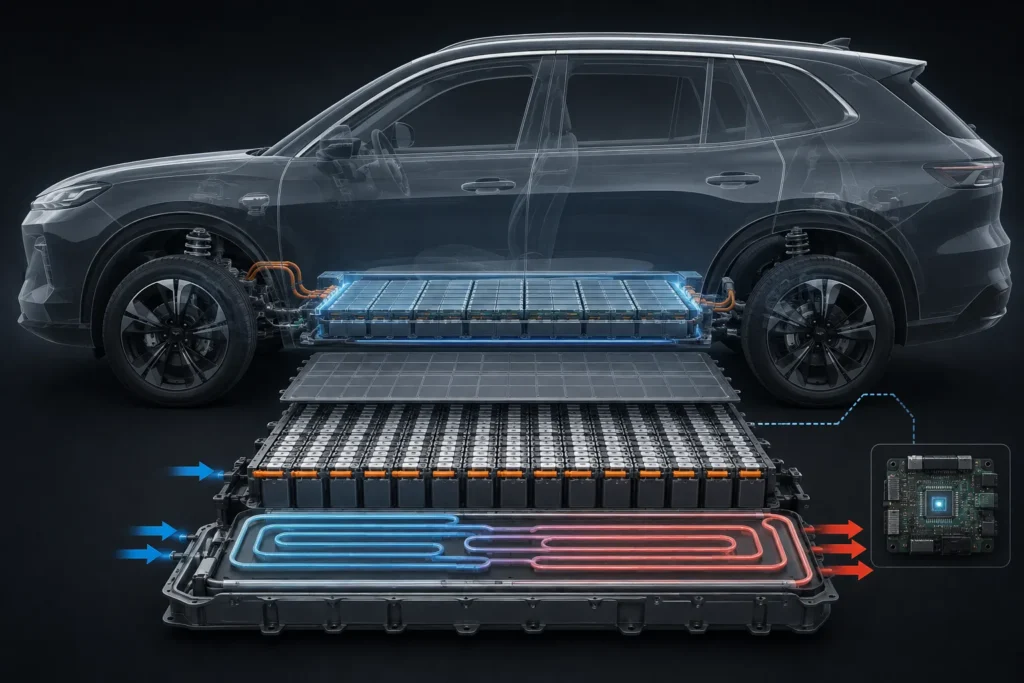
High-voltage battery and thermal-management technology are central to modern plug-in hybrid performance.
Battery specifications vary by market. Some EX5 EM-i versions use an 18.4 kWh battery, while other versions offer larger battery capacities.
Certain local specifications also use LFP battery technology and a Cell-to-Pack architecture, together with thermal-management systems designed to maintain appropriate operating conditions.
Battery longevity depends on several factors, including temperature, charging behavior, depth of discharge, state of charge and the vehicle's battery-management system.
How Long Can the Battery Last?
There is no single number that can accurately predict the service life of every EM-i battery.
Before buying a plug-in hybrid, customers should ask the local dealer about:
- Battery warranty duration.
- Maximum mileage covered by the warranty.
- Warranty conditions.
- Battery capacity-retention requirements.
- Replacement cost outside warranty.
- Availability of battery components.
- Availability of qualified high-voltage technicians.
These details are much more useful to a buyer than simply knowing the battery's chemistry or advertised lifespan.
Is EM-i More Expensive to Maintain Than an EV?
Compared with a fully electric vehicle, a PHEV contains more mechanical components because it has both an electric powertrain and an internal-combustion engine.
That means maintenance can include systems such as:
- Engine oil.
- Engine filters.
- Cooling systems.
- Ignition components.
- Gasoline-engine components.
- Hybrid-system components.
The advantage is that the gasoline engine may operate less frequently if the vehicle is regularly charged and used electrically for daily trips.
How to Calculate EM-i Running Costs
The best approach is to divide your driving into electric and gasoline operation.
Electric Driving Cost
The basic calculation is:
Actual energy consumption should be used rather than simply dividing the battery's capacity by its range.
Gasoline Driving Cost
For a complete ownership calculation, also consider maintenance, tires, insurance, depreciation and resale value.
Why Regular Charging Matters
A plug-in hybrid delivers its greatest benefit when the owner actually plugs it in.
If the battery is charged every night, many short daily journeys can be completed primarily using electricity.
If the vehicle is rarely charged, much of the advantage of carrying a larger battery is lost.
For drivers covering 30, 50 or 70 km per day, regular overnight charging can potentially reduce gasoline use substantially, depending on the vehicle's actual electric range and driving conditions.
Is EM-i Good for Long-Distance Travel?

Geely EM-i combines electric driving with gasoline-powered long-distance flexibility.
Long-distance travel is where the plug-in hybrid concept becomes particularly attractive.
A driver can leave home with a fully charged battery and a full fuel tank. Electric power can handle part of the journey while the gasoline engine provides additional range when required.
Unlike a battery-electric vehicle, the driver does not have to depend entirely on the availability of fast-charging stations.
This can be especially useful in countries where charging infrastructure is still expanding.
Did a Geely EM-i Actually Travel More Than 1,000 km?
Yes. Geely has highlighted real-world long-distance testing involving its EM-i technology.
In December 2025, a Geely STARRAY EM-i Long Range equipped with a 29.8 kWh battery completed a 1,056-km road journey between Sydney and Melbourne in Australia, with a reported fuel consumption of 3.83 L/100 km under the conditions of the test.
The significance of this result is that the vehicle was driven on public roads rather than simply being evaluated on a laboratory test cycle.
However, the result should not be interpreted as a guarantee that every owner will achieve exactly 1,056 km on every journey.
Weather, traffic, speed, terrain, payload, battery state and driving style can all change the outcome.
EM-i vs. a Fully Electric Vehicle
| Category | EX5 EM-i | Fully Electric Vehicle |
|---|---|---|
| Daily commuting | Excellent | Excellent |
| Home charging | Very important | Very important |
| Long-distance flexibility | Very high | Depends on charging infrastructure |
| Gasoline engine | Yes | No |
| Electric driving | Yes | Yes |
| Charging dependency during long trips | Lower | Higher |
| Mechanical maintenance | Generally higher | Generally lower |
| Tailpipe emissions | Possible during hybrid operation | None |
EM-i vs. a Conventional Hybrid
A conventional hybrid generally relies on regenerative braking and the gasoline engine to maintain its smaller battery. A plug-in hybrid such as EM-i has a much larger battery that can be charged from an external power source.
This allows the owner to begin the day with electrical energy stored from the grid rather than relying only on energy recovered while driving.
The trade-off is additional hardware, greater system complexity and the need for charging infrastructure.
Major Advantages of Geely EM-i
- Long combined range: Some market-specific versions advertise more than 1,000 km under NEDC testing.
- Electric daily driving: Depending on the market, electric range can be substantial for everyday commuting.
- Strong electric motor: Global specifications quote up to 160 kW.
- High engine efficiency: Geely quotes thermal efficiency of up to 46.5% for the EM-i engine.
- Long-distance flexibility: The gasoline engine reduces dependence on charging infrastructure.
- Highly integrated electric drive: The 11-in-1 architecture aims to reduce losses and component complexity.
Potential Disadvantages
- Greater mechanical complexity than a pure EV.
- Regular charging is important if owners want maximum fuel savings.
- Official range figures may differ from real-world results.
- Specifications vary between markets.
- The hybrid system adds weight.
- Dealer and high-voltage service capability are important.
Is EM-i Suitable for Gulf Countries?
For many Gulf drivers, the answer could be yes, particularly when home charging is available.
The driving pattern in countries such as Saudi Arabia and the UAE can include short daily urban journeys combined with long highway trips between cities.
That combination is exactly where a PHEV can make sense.
Electric power can be used for daily commuting, while gasoline provides the flexibility required for longer journeys.
Is EM-i Suitable for Egypt?
The technology can also make sense for Egyptian drivers who have access to home charging but regularly travel between cities.
A driver may use electric power for everyday urban journeys and retain the gasoline engine for longer trips to destinations such as Alexandria, the Red Sea or other long-distance routes.
However, local warranty coverage, service availability, charging equipment and the exact Egyptian-market specifications should always be checked before purchase.
What Should You Check Before Buying an EX5 EM-i?
Do not base the purchase decision solely on the advertised range. Ask the dealer for specific information about the exact vehicle being sold in your market.
- What is the battery capacity?
- What is the official electric range?
- What is the official combined range?
- What is the official fuel consumption?
- What AC charging system is included?
- Does the vehicle support DC charging?
- What is the battery warranty?
- What are the warranty conditions?
- What is the scheduled maintenance cost?
- Are high-voltage components locally available?
- How long would a battery replacement take?
- What is the replacement cost outside warranty?
- Can the vehicle be conveniently charged at home?
- Does the vehicle support remote climate control?
- What happens when the battery's state of charge becomes very low during a long trip?
Common PHEV Buying Mistakes
1. Confusing Total Range With Electric Range
A 1,000-km combined range does not mean 1,000 km of electric driving.
2. Not Charging the Vehicle
Buying a plug-in hybrid and rarely charging it wastes much of the technology's potential.
3. Relying Only on NEDC
NEDC figures are useful for comparison but should not be treated as guaranteed real-world results.
4. Ignoring Electricity Costs
Electricity is not free. The cost of charging should be compared with local gasoline prices.
5. Ignoring After-Sales Support
For a vehicle combining a gasoline engine with a high-voltage electric system, dealer expertise is a major part of the ownership experience.
Which Driving Mode Should You Use?
| Driving Situation | Recommended Mode |
|---|---|
| Short urban trips | Pure |
| Mixed daily driving | Hybrid |
| Long-distance travel | Hybrid |
| Overtaking or strong acceleration | Power |
| Maximum response | Power |
| Maximum efficiency | Pure or Hybrid depending on conditions |
Does Geely EM-i Deserve a Place on Your Shopping List in 2026?
The answer depends heavily on how you use your vehicle.
EM-i Makes Strong Sense If You:
- Drive moderate distances every day.
- Can charge at home.
- Take occasional long trips.
- Want an electric driving experience.
- Do not want to depend completely on public charging.
- Want to reduce gasoline consumption.
- Want one vehicle capable of serving both city and highway duties.
Another Powertrain May Be Better If You:
- Cannot charge at home or work.
- Drive very long highway distances every day.
- Want a fully electric vehicle.
- Prefer the simplest possible mechanical system.
- Are buying the vehicle only because of the "1,000 km" headline.
The Future of EM-i Technology
Geely's EM-i strategy extends beyond a single vehicle. The company is expanding its hybrid technology into multiple international markets, with models carrying names such as EX5 EM-i and STARRAY EM-i depending on the region.
As plug-in hybrids become more competitive, the most important improvements may not come simply from larger batteries. Intelligent energy management, software optimization, thermal control and more efficient electric drive systems could become increasingly important.
Frequently Asked Questions
Is Geely EM-i a fully electric technology?
No. EM-i is a plug-in hybrid system combining a gasoline engine, electric motor and high-voltage battery.
Can the Geely EX5 EM-i really travel more than 1,000 km?
Certain versions have official combined-range figures above 1,000 km under specified test conditions, and Geely has also reported real-world long-distance testing exceeding 1,000 km. Actual range depends on the vehicle specification and driving conditions.
Can the EX5 EM-i drive using electricity alone?
Yes. The vehicle can operate in electric mode when sufficient battery energy is available. Electric range varies significantly between markets and versions.
Does the EM-i need to be charged?
It can continue operating as a hybrid when the battery's available electric energy becomes low, but regular charging is important if the owner wants to maximize the fuel-saving benefits of a plug-in hybrid.
What happens when the battery gets low?
The hybrid system can increase the role of the gasoline engine while continuing to manage the electric motor and battery.
Is EM-i suitable for hot Gulf climates?
It can be used in hot climates, but high temperatures, air-conditioning demand and thermal-management requirements can affect energy consumption and real-world range.
Is 4.3 or 4.4 L/100 km guaranteed?
No. Such figures are official test results for particular market specifications. Actual consumption depends on speed, temperature, air conditioning, load, terrain, battery charge and driving style.
Is EM-i better than a fully electric vehicle?
Not universally. A fully electric vehicle may be better for drivers who have reliable charging access and want to eliminate gasoline completely. EM-i can be more attractive for drivers who want electric daily driving but also want gasoline-powered long-distance flexibility.
Is Geely EM-i worth buying?
It can be a strong choice for drivers who can charge regularly, use electricity for daily commuting and occasionally travel long distances. Buyers should compare the exact local specification, warranty, service network and total ownership cost before making a decision.
Final Verdict: Is the 1,000-km Geely EM-i Range Real?
Geely's EM-i technology deserves attention because it attempts to combine the best characteristics of electric and gasoline-powered transportation.
The real strength of the system is not simply the headline figure of more than 1,000 km. Its value comes from combining a rechargeable battery, electric motor, efficient gasoline engine, dedicated hybrid transmission and intelligent energy management.
For drivers in the Middle East and other markets where long highway journeys remain common, this combination can offer a compelling alternative to both conventional gasoline vehicles and fully electric cars.
However, buyers should remember one important rule: do not buy a plug-in hybrid simply because the advertisement says "1,000 km."
The technology makes the most sense when the owner can charge the vehicle regularly and use electric power for everyday driving while keeping gasoline available for longer journeys.
That is where EM-i changes from a marketing number into a practical transportation solution.
Published for VibCar | Automotive Technology & EV Insights
%20(1).png)


.png)
0 Comments